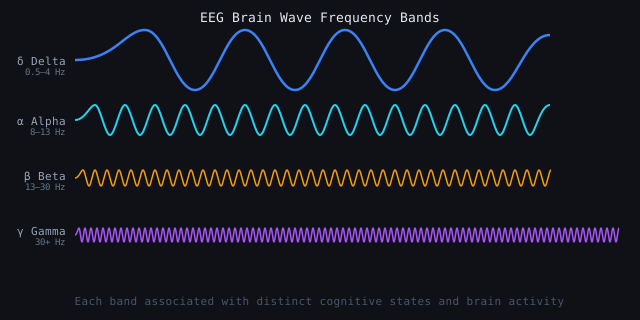
Frequency bands and mental states
EEG oscillations arise from synchronized post-synaptic potentials in cortical networks. Each frequency band reflects a different network state and has characteristic cognitive correlates.
- Delta (0.5–4 Hz): deep sleep (NREM stage 3/4), unconscious states, cortical inhibition.
- Theta (4–8 Hz): REM sleep, memory encoding (hippocampus), drowsiness, creative states.
- Alpha (8–13 Hz): relaxed wakefulness, eyes closed, cortical idling, posterior dominant rhythm.
- Beta (13–30 Hz): active thinking, motor planning, focus, anxiety, medication effects.
- Gamma (30–100 Hz): binding of distributed features, conscious perception, high cognitive load.
Clinical EEG and epilepsy
Clinical EEG diagnoses epilepsy through characteristic waveform patterns (spike-and-wave, polyspike) and localizes seizure onset zones for surgical planning.
- Absence epilepsy: 3 Hz spike-and-wave complexes, generalized.
- Temporal lobe epilepsy: focal temporal sharp waves and seizure evolution.
- Sleep EEG: K-complexes, sleep spindles (12–14 Hz) define sleep stages.
Brain-computer interfaces and neurofeedback
BCIs decode EEG signals in real time to control external devices. Neurofeedback increases or suppresses specific bands to treat ADHD, anxiety, and stroke.
- Motor imagery BCI: distinguish imagined left/right movement via lateralized mu (8–12 Hz) desynchronization.
- P300 spelling: detect rare target event-related potentials for communication.
- Neurofeedback for ADHD: increase theta/beta ratio correlates with symptom reduction in some trials.